

Turkey Gulet Charter Guide: Ports, Routes & Prices
Plan a gulet charter in Turkey: compare Bodrum, Marmaris, Fethiye, Göcek and Bozburun, airport transfers, Meltemi winds, weekly prices and sample routes.
Start your adventure by selecting a destination below.
Turkey is the home of the traditional wooden gulet and the Blue Voyage, a style of slow coastal cruising that began here decades before modern charter marketing. A gulet charter in Turkey follows a coastline that runs from Bodrum on the southern Aegean through the Gulf of Gökova, along the Datça and Bozburun peninsulas, into the bays of Göcek and Fethiye and on towards the Lycian shore at Kekova. You are not choosing a resort; you are choosing a floating base that moves each day between anchorages, fishing villages and pine-backed coves.
Most of the fleet is made up of classic gulets between 20 and 40 metres, alongside motor yachts and trawlers for guests who prefer more speed between anchorages. Before you compare ports, browse all gulets for charter in Turkey and our sample Turkey itineraries, which show realistic weekly routes for each region.

Where to Board a Gulet in Turkey: Main Charter Hubs
Turkey's charter coast divides into five practical boarding hubs, each with its own marinas, sailing character and cruising grounds. Choosing the right hub matters as much as choosing the yacht, because it decides whether your week is spent island hopping, exploring sheltered pine gulfs or visiting Lycian ruins by tender. For a side-by-side look at transfers, marinas and routes, see our comparison of Bodrum, Göcek, Marmaris and Fethiye.
Bodrum: Aegean Nightlife with Greek Island Access

Bodrum charters board mainly at Milta Bodrum Marina, beneath the castle, and it is Turkey's most cosmopolitan departure point. The Greek island of Kos lies a short crossing away for yachts permitted to cross the border, while the sheltered Gulf of Gökova suits guests who prefer pine-lined anchorages to marina nightlife. Provisioning is easy, with chandlers and produce markets used to supplying large charter fleets. Browse gulets based in Bodrum or read our Bodrum charter guide for anchorage-level detail.
Marmaris: The Marina Infrastructure Hub

Marmaris centres on Netsel Marina, one of the busiest turnaround points on the coast during the Saturday changeover. It is the natural gateway to the Hisarönü Gulf and the Datça peninsula, and yachts permitted to cross can continue to Rhodes or Symi. Fuel, technical support and last-minute provisioning are more reliable here than in the smaller bays further east. Compare gulets based in Marmaris or read our Marmaris charter guide for marina logistics.
Fethiye: Ölüdeniz, Lycian Ruins and the Route to Kekova

Fethiye charters board at Ece Saray Marina or along the town quay. From here, gulets reach the islands of Fethiye Bay, anchor off Ölüdeniz and Butterfly Valley, and make the longer run east towards Kaş and the sunken ruins at Kekova. It is the hub of choice for charters that combine Lycian rock tombs and archaeology with swim stops. Check the gulets based in Fethiye or read our Fethiye charter guide for anchorage notes along the coast.
Göcek: Pine-Fringed Gulfs and Short-Hop Anchorages

Göcek boards from D-Marin Göcek and neighbouring marinas inside a sheltered gulf, where the Twelve Islands and the coves of Skopea Limanı are rarely more than an hour apart. That makes it the quietest of the major hubs, favoured by guests who want slow mornings and short afternoon hops rather than long open-water legs. Browse gulets based in Göcek or read our Göcek charter guide for a bay-by-bay breakdown.
Bozburun: Traditional Shipyards and Peninsula Solitude

Bozburun is one of Turkey's best-known gulet-building villages, and it keeps a working shipyard character that the larger marinas have lost. Sailing from here means fewer boats at anchor and easy access to the quieter inner reaches of the Hisarönü Gulf, away from the Marmaris marina traffic. See the gulets based in Bozburun or read our Bozburun charter guide for village-level detail.
Weather, Winds & Best Time to Charter in Turkey
The dominant summer wind is the Meltemi, a northerly that builds through the afternoon and usually eases by early evening. It peaks in July and August, when gusts on the open Aegean between Bodrum and Kos can reach 25–30 knots by mid-afternoon. Experienced captains respond with earlier departures and sheltered gulf routes for guests less comfortable under sail. Spring and autumn bring lighter, more variable winds, occasionally interrupted by the southerly Lodos, which can bring swell and cloud.
| Period | Typical Conditions | Best Suited For |
|---|---|---|
| May – June | Light-moderate breeze, sea 18-22°C | First-timers, families, sailors sensitive to wind |
| July – August | Meltemi builds daily, sea 25-27°C | Experienced charterers, morning-departure itineraries |
| September | Meltemi softening, warm sea, fewer boats | Families and couples seeking balance |
| October | Variable wind, occasional Lodos swell | Quiet anchorages, lower rates, shorter days |

Air temperatures range from the low 20s°C in May and October to the mid-30s°C in July and August, with the sea offering natural cooling most afternoons. Families with younger children and first-time charter guests usually do best in June or September, when the Meltemi is present but manageable. For a month-by-month breakdown, see our 2027 Turkey gulet season guide.
Getting to Turkey & Boarding Logistics
Two airports handle most charter arrivals: Milas-Bodrum Airport (BJV) for Bodrum, and Dalaman Airport (DLM) for Marmaris, Fethiye, Göcek and Bozburun. Typical private transfer times are:
- Bodrum: Milas-Bodrum Airport (BJV), about 35–40 minutes to Milta Bodrum Marina
- Marmaris: Dalaman Airport (DLM), about 1.5 hours to Netsel Marina
- Fethiye: Dalaman Airport (DLM), about 45–50 minutes to Ece Saray Marina
- Göcek: Dalaman Airport (DLM), about 25–35 minutes to D-Marin Göcek
- Bozburun: Dalaman Airport (DLM), about 2–2.5 hours via the peninsula road
Charters in Turkey usually run Saturday to Saturday. Boarding takes place in the afternoon once the crew has finished provisioning and the paperwork for your guest list, and disembarkation is on the following Saturday morning after breakfast. Private transfers are arranged by your broker or the yacht's management and timed to your flight rather than to a fixed marina schedule.
Choosing a Route: Sheltered Bays or Open-Water Passages
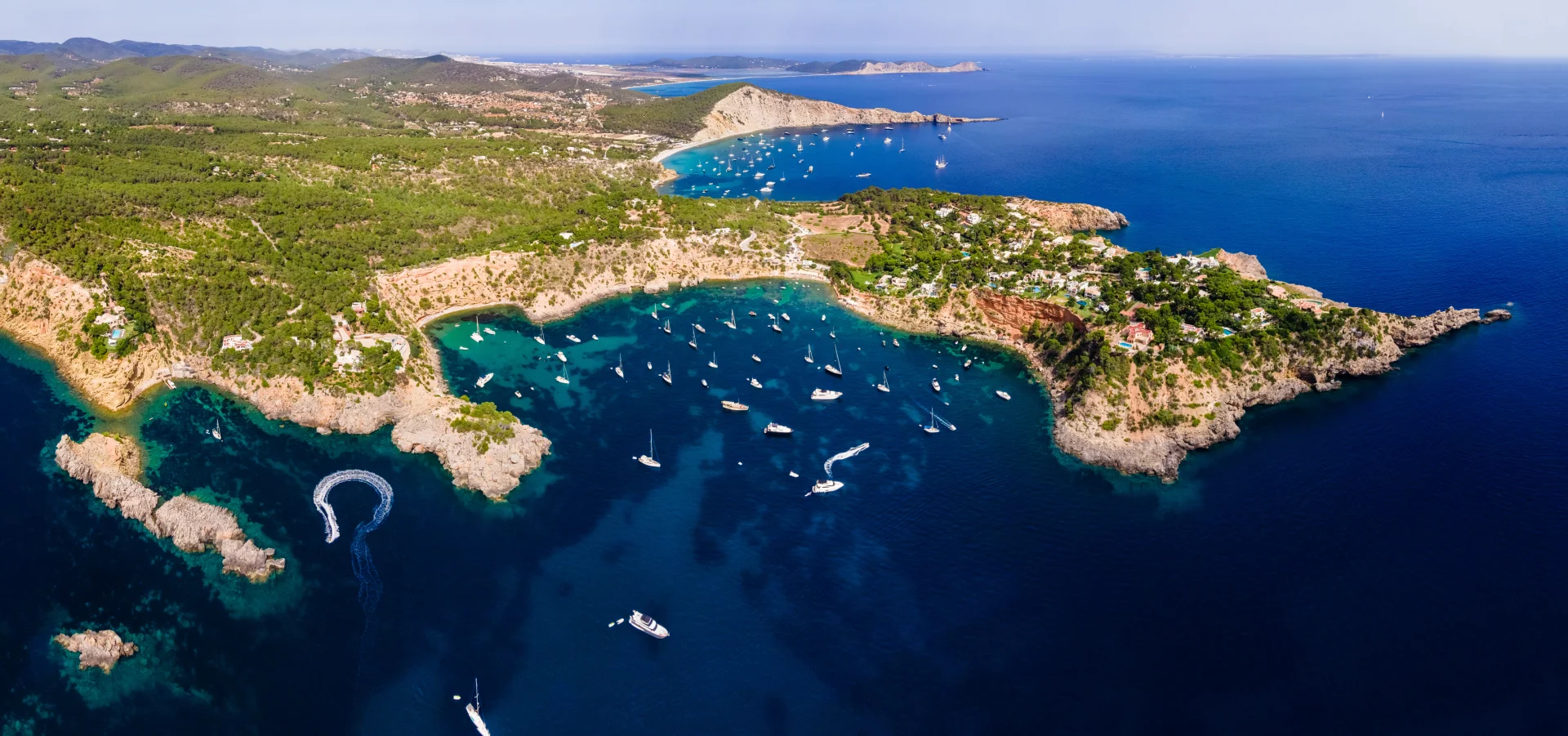
Turkish gulet itineraries follow two broad styles. Sheltered routes, common in Göcek, the Hisarönü Gulf and the Gulf of Gökova, keep daily legs under two hours and favour frequent swim stops over distance. The Bodrum–Gökova–Bodrum route is a good example: it loops back to Bodrum without an open-water crossing. Open-water routes, such as the Bodrum–Knidos–Datça–Bozburun loop or the one-way Bodrum to Marmaris route, involve longer passages and suit guests who are happy with a few hours under way in Meltemi conditions.
For a Lycian-focused week, the Fethiye–Kekova–Fethiye route balances ruins with swim stops in sheltered bays, while the Marmaris–Hisarönü–Marmaris route suits guests who want marina convenience without long transits. Each itinerary page lists daily stops and anchorages.
How Much Does a Gulet Charter in Turkey Cost?
Starting rates on our Turkish fleet begin at around €10,500 per week for smaller gulets and rise above €60,000 for the largest VIP-class yachts. Peak weeks in July and August cost more than the starting rate, so the yacht's size, finish level and your dates have the biggest effect on the final price. Compare Deluxe, Luxury and VIP class yachts to see the range.
Most Turkish gulet charters include fuel for around four cruising hours a day and Turkish port taxes in municipal harbours. Food is usually arranged as a per-person full-board package, while drinks are normally extra. See what is included in a gulet charter and our guide to gulet charter prices for a full breakdown, or read our luxury gulet charter guide for Turkey if you are planning a premium week.
Frequently Asked Questions
What is included in a private gulet charter price in Turkey?
The weekly charter fee usually covers the yacht, a professional crew (captain, chef and deckhands), fuel for around four cruising hours a day, Turkish port taxes in municipal harbours, linen, towels and standard water toys. Food is normally booked as a full-board package priced per person, and drinks are paid separately. Private marina fees, extra fuel for longer routes and any Greek port taxes are usually extra.
Can I sail from Turkey to the Greek islands on a private charter?
Often, yes. Kos is a short crossing from Bodrum, and Rhodes and Symi are close to Marmaris. The yacht must be permitted for the crossing, and the captain clears customs and passport control on both sides using a transit log. Greek port taxes, customs fees and transit log costs are usually extra, and not every yacht is set up for cross-border cruising, so confirm this with your broker before booking.
Do I need a visa for a gulet charter in Turkey?
It depends on your nationality. Many nationalities can enter Turkey visa-free for short stays, and others can apply online for an e-Visa before travelling through the official Republic of Türkiye e-Visa website. This is separate from the charter paperwork, which the crew handles with the port authority on your behalf.
How does APA work on a Turkey gulet charter?
Some yachts, mainly larger luxury gulets and motor yachts, work on an APA (Advance Provisioning Allowance) instead of a fixed food package. The APA is typically 25–30% of the charter fee and is paid before boarding. The captain uses it for food, drinks, extra fuel and marina fees, keeps receipts and refunds any unspent balance at the end of the week. Your quote will show which model your yacht uses.
Is a Turkey gulet charter suitable for families with children?
Yes, especially in the sheltered gulfs around Göcek and Fethiye, where short daily legs and calm anchorages reduce exposure to open swell. Many gulets carry paddleboards, kayaks and inflatable toys as standard, and crews are used to having children on board. For more planning tips, see our guide to family gulet cruises in Turkey.
Is Bodrum or Göcek better for a first gulet charter?
Bodrum offers a livelier marina scene and possible crossings to Kos, so it suits guests who want some evening life ashore. Göcek is quieter and more sheltered, with shorter legs between pine-backed bays, which makes it the more forgiving choice for guests who prioritise calm water.
Broker's Tip: Booking Around the Crowds
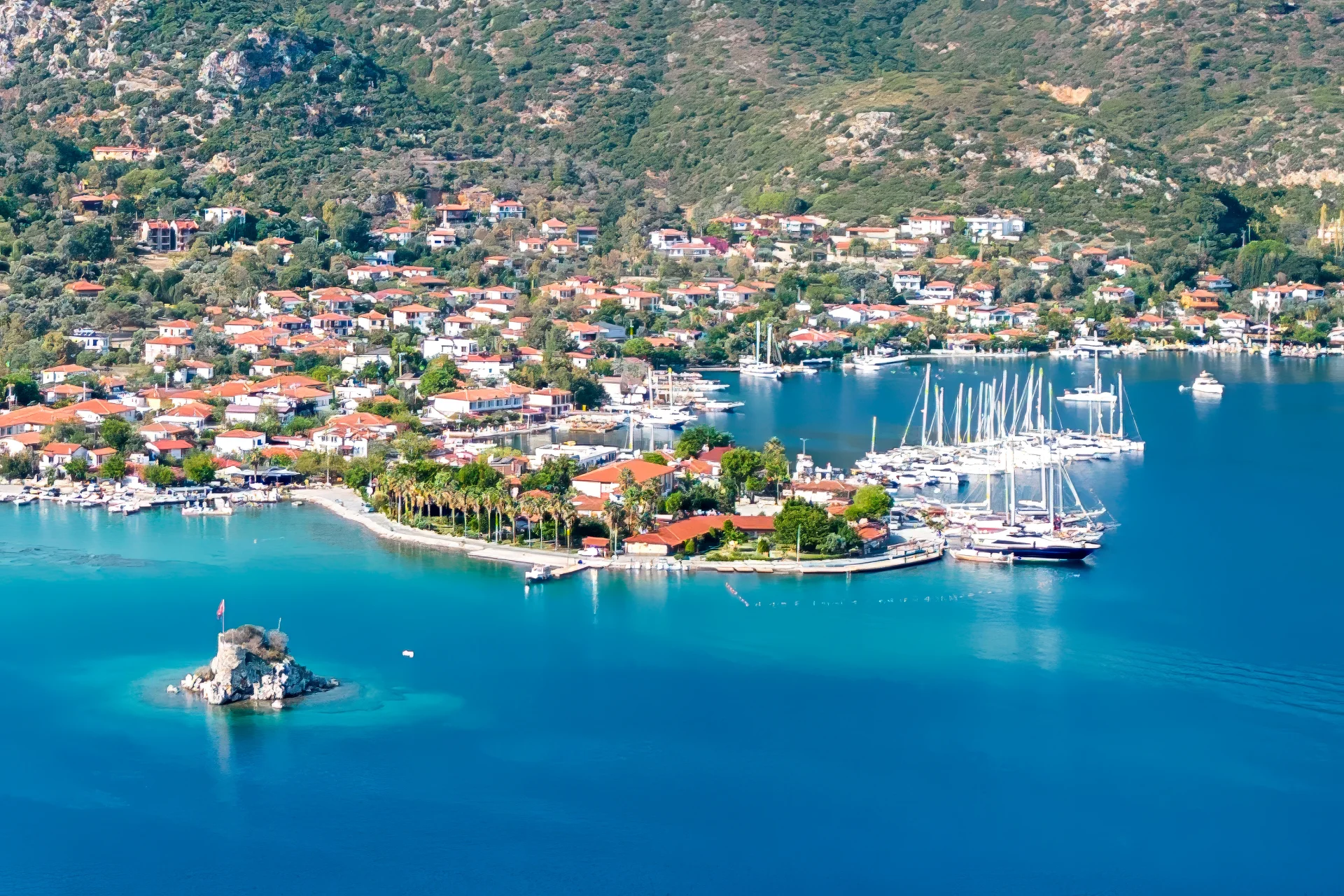
The most effective way to find quieter anchorages is to move your dates a week or two either side of the August peak. Popular stops such as Ölüdeniz and the Twelve Islands are noticeably less crowded, with almost no drop in weather quality. If the Meltemi concerns you, ask for a captain briefing built around morning departures rather than a fixed itinerary; most experienced crews will happily move earlier in the day to avoid the afternoon wind. Contact our charter team and we will match the right hub, route and gulet to your group.
Sail this destination aboard one of our handpicked Turkey gulets
Discover Turkey featured yachts perfect for your journey

Charter this route with our expertly selected gulets


Explore one of our carefully crafted Turkey itineraries
Discover Turkey sailing routes perfect for your next adventure