
It's all-inclusive but the term may have different interpretations in various agreements. In most crewed gulet and yacht rentals, it is the term used to define a reservation that includes the yacht and crew along with a set meal and drinks program onboard, rather than a rate that includes every possible charter expense.
Too Long; Didn't Read: Summary
- What an all inclusive yacht charter includes and excludes, and how companies understand “all inclusive” by what they offer in meal, food, and drink packages.
- On MYBA-style yacht contracts, the charter fee is in one column, while the APA, delivery/redelivery, and security deposit are separately listed so it is never assumed the charter fee covers everything.
- How you can compare different “all-in” offers and best understand what your charter will cost before booking.
It is such a crucial distinction because two companies can use the all-inclusive term while proposing wildly different costs. You should expect to see exactly what you are getting for your money, what you will be charged for separately, and what will depend on where you cruise, your embarkation port, and your preferences.
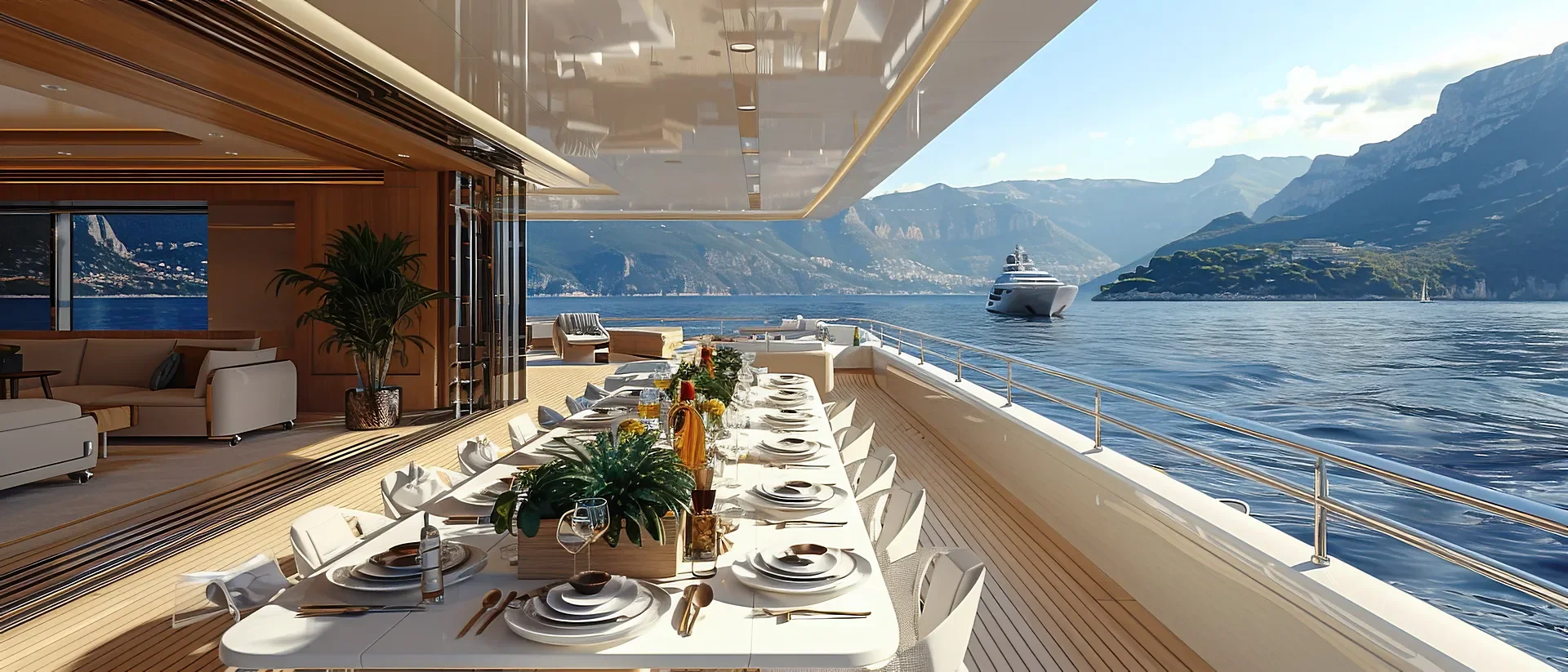
What is typically covered in an “all inclusive yacht charter”?
On a gulet charter or an MYBA booking, “all inclusive” might mean that the yacht, the crew, and a known quantity meal and soft drink supply are packaged together, but all other operational costs are not taken into account as one total cost.
With Mediterranean Crewed charters, it’s better to think practically than literally. If a broker or operator says “all inclusive”, the charterer should assume that what’s meant is accommodation on the yacht, provision of the crew, and a specified meal plan. However, it only becomes relevant once the quote details the exact meals, drinks, and service in a written form.
It is a mistake to believe an “all inclusive” yacht charter is exactly the same package as at a resort. The itinerary, fuel, docking dues, and excessive bar usage may greatly vary the real final costs. Therefore, a good charter agreement template clearly shows you what are fixed base costs and what will vary depending on the decisions of the charter guest once they step aboard the yacht.
"Gulet Broker has three cost options per week for food at 455, 555 and 770 euro per person including soft drinks"
The charter fee on a MYBA-style agreement normally covers the yacht and crew for the agreed charter period. MYBA documentation then lists other cost lines separately, including APA, delivery or redelivery fees, and the security deposit. This separation is important because it shows how the market structures value. The charter particulars typically identify the charter period, place of delivery, place of re-delivery, cruising area, maximum guests sleeping and cruising, crew, and charter fee. That means the guest can see the fixed framework of the booking before any variable onboard spending is added. If the yacht starts where the guests want to board, the quote may look simpler. If it must reposition to reach that port, a delivery fee may appear as a separate line. Pro tip: the closer the departure and return ports are to the yacht’s normal operating base, the easier it is to keep costs predictable.

The 9 Standard Inclusions of a Crewed Yacht Charter
For a private gulet or crewed yacht, the most common inclusions are the yacht, the crew, and an agreed list of onboard hospitality. The detail still varies with the operator and the small print of the contract.
Probably the most helpful way to think of “what’s included” is to divide it between accommodation, service, and catering since these are the things you’ll experience rather than rough marketing terms.
- Yacht and guest cabin(s) for the exclusive use of you and your guests.
- Service of the professional crew.
- Breakfast served aboard.
- Lunch service and dinner service as per an agreed menu.
- Tea served in the afternoon.
- Desserts served after dinner.
- All soft drinks and water.
- Linen, some light cleaning, and the hospitality of the crew on board.
- Planning and preparation of the cruising route given the yacht’s intended cruising grounds.
None of the above is offered by every yacht and written exactly as above. It’s a good reality check to ask if the offering is based on a menu, full board, or an APA.
Meal Packages vs. MYBA Extra Regulations: What’s the Difference?
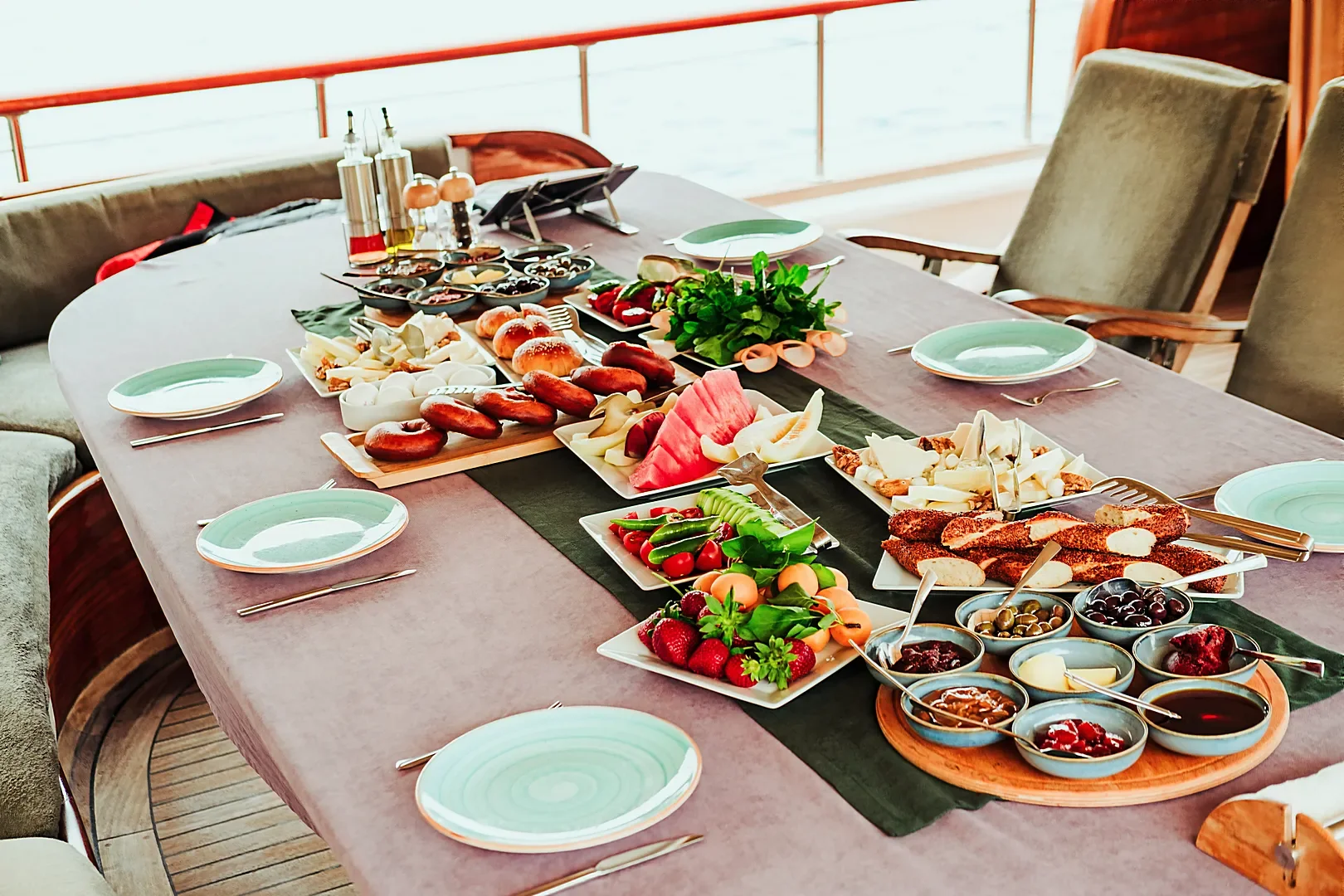
They’re not equivalent. The Gulet Broker menu options describe what’s included in terms of on-board dining and soft drinks, whereas MYBA normal terms separate out actual items of planning and preparation from the charter fee.
Many first-time charterers fall into this trap. A menu package might be very inclusive of food and non-alcoholic drinks; however, this does not mean operational costs are excluded. MYBA forms clarify this by writing the charter fee on the same page as the APA, delivery/redelivery fees, and security deposit.
The most effective approach is to ask for the mentioned menu, establish the drinks term, and check age/guest-based rates. Gulet Broker’s menu PDFs are a guideline for the kind of details clients should demand.
- Step 1: Request the actual menu file, not a brief overview. It should state if breakfasts are fully inclusive, if there are snack platters, and if desserts are part of the full board arrangement. If the term is “full board” without any clarification, that information should still be demanded from the broker.
- Step 2: Isolate the drinks price rule. When it clearly states “soft drinks are inclusive”, then that is well understood. If “beverages are inclusive” is used, this is not a clear explanation. Many assume this includes alcohol. However, on many yachts, wine, beer, spirits, or premium mixers are outside the full board package until quoted.
- Step 3: Confirm pricing based on the type of guest. One good benchmark here is the classic menu of Gulet Broker, which defines children in the 0 to 5 age group category as free, while the 6 to 10 age group receives a 50% discount. This benchmark should be taken into consideration while planning the family budget, as a food menu that appears expensive per adult could be quite differently priced once the child price is applied.
What’s the difference between all inclusive full board and APA charters?
These are different pricing model descriptions: all-inclusive means taking a larger part of onboard hospitality, full board often covers meals alone, and APA is advanced allowance payments on account to pay actual trip expenses as incurred. All-inclusive charters are usually simplest for customers seeking price clarity. Meals are all pre-planned, soft drinks may or may not be included, and the routine on board will be fairly set. This works well for family groups and celebration charters where no one wishes to argue about each bottle of water or tray of nuts.
The full board concept is becoming narrower. It usually means breakfast, lunch, and dinner, but not necessarily afternoon cookies or cakes, after-dinner treats, or an extensive bar menu. The term can still offer excellent value, but it is not the same as a full fixed-price charter. This is a common area where people expect too much from the term.
APA, or Advance Provisioning Allowance, acts the other way around. It is a pre-agreed floating fee that the captain deducts post-charter while settling the spend on food, fuel, berths, and sundry credit. A charter that operates with APA will have a final sum that is dependent on what the guests consume and where they go cruising. This gives more adaptability, although less certainty.
How do you best carve up costs not part of the deal?
A good strategy is to break costs down into what is guaranteed, what is fluctuating, and the upgrade possibilities. The use of a MYBA format makes this easier for most because it presents the charter rate separately from the APA, any delivery fees, and the security deposit.
First, highlight the fixed numbers. This covers the charter cost itself, the contracted meal program, and any statutory tax fees or compulsory service tips. Once these are incorporated, the group can identify how much of a spend there is prior to any optional choices.
Step 2 involves figuring out the trip variables. Is the yacht to be delivered to another embarkation point? Delivery or redelivery fees may be effective. Do you want premium wines, extended cruising, or extra marina stops? Those options are off-menu. Step 3 is allocating a contingency fund. Not because the quote is low, but because the charter is a floating vacation with tangible running costs. Pro tip: groups that establish a clear onboard spending limit before departure rarely have unpleasant accounting to settle once the cruise is underway.
How can guests compare menu tiers before booking?
The simplest method is to place price, meal scope, and drinks policy next to each other. Gulet Broker’s three menu tiers provide a good indication of how package depth can vary across one charter operator: Standard, Luxury, and High Luxury.
The Standard or Classic has total food and drink costs included in the price for 21 meals. The Luxury tier covers 21 meals with a few gourmet exceptions. The High Luxury tier includes all costs for 20 meals, all afternoon teas, and an open bar. As with the overall rates, these package levels ensure predictable expenses tailored to what the group eats and drinks.
Frequently Asked Questions (FAQ)
- What does "all-inclusive" mean on a yacht charter?It typically means the reservation includes the yacht, the crew, and a specific meal/drinks program. It does not necessarily mean every possible charter expense (like fuel or port dues) is covered.
- What is APA (Advance Provisioning Allowance)?APA is a pre-agreed floating fee paid in advance. The captain deducts actual trip expenses (like food, fuel, and berths) from this allowance as they are incurred, offering adaptability but less upfront certainty compared to an all-inclusive package.
- Are alcoholic beverages included in a "full board" package?Not always. Many assume "beverages inclusive" covers alcohol, but wine, beer, and spirits are often outside the standard package until specifically quoted.