Blue Cruise vs. Standard Sailing Vacation: What Makes Them Unique?
Expert Insight by Gulet Broker: With our headquarters based in Fethiye—the heart of the Turkish Riviera—our team has spent years organizing hundreds of successful Mediterranean charters. Based on our firsthand experience managing luxury fleet operations, we know exactly what makes a coastal journey unforgettable.
People often use the term “sailing holiday” in a very generic sense to describe any vacation on the water. In reality, these trips can be vastly different. A blue cruise in Turkey may sound similar to a standard sailing holiday—you’re at sea, visiting stunning bays, and soaking up the sun all day—but the overall experience is beautifully unique from the moment you step on board.
It’s important to understand this distinction because the experiences are worlds apart. Some clients will want a classic, traditional gulet holiday—featuring a full crew, exquisite meals made for you, and relaxed anchorages in secluded coves. Others want a holiday on a boat and the freedom that goes with it, be it a bareboat charter, flotilla sailing, or a skippered yacht.
What is a Blue Cruise in Turkey?
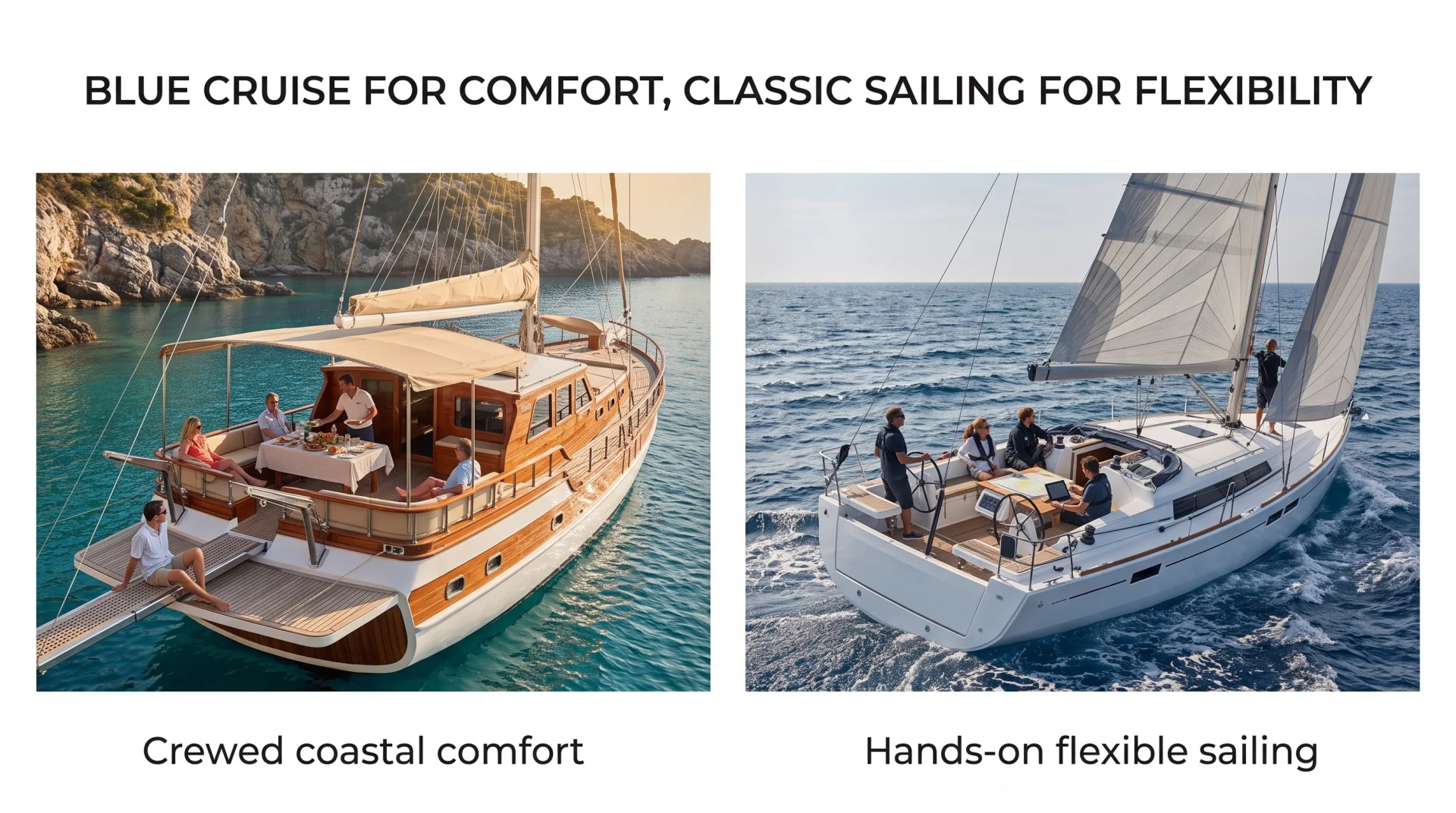
A Blue Cruise revolves around the stunning Aegean and Mediterranean coasts and the iconic vessel known as a gulet. They started life as the type of wooden sailboat you read about in gulet history, used by sponge divers, sea farmers, fishermen, and coastal traders. While the original vessels were built purely for rugged practicality, modern Turkish gulets have evolved into luxurious floating villas—pleasure boats in every sense of the word.
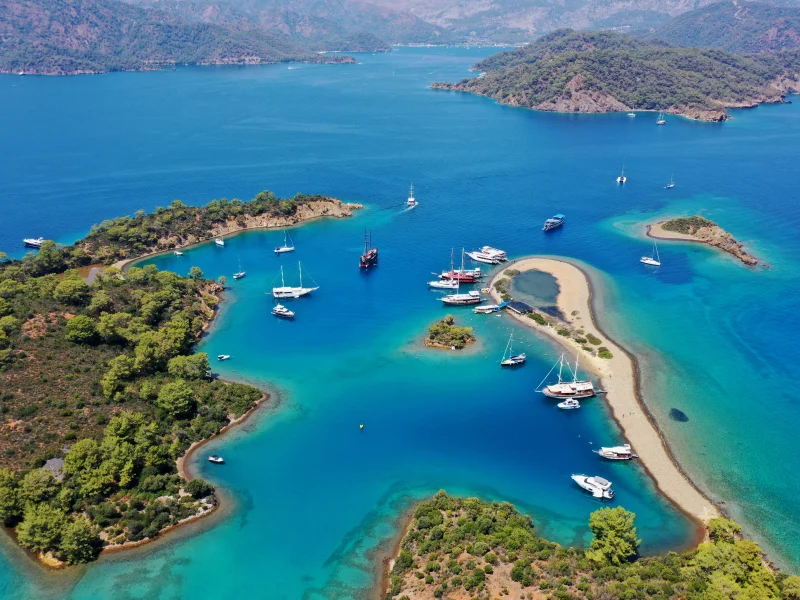
In holiday terms, a blue cruise is a fully crewed, culturally rich coastal journey. Trips tend to occupy familiar, legendary shorelines like Bodrum, Marmaris, Fethiye, Göcek, Kaş, and Kekova. Depending on regulations, itineraries frequently extend into the neighboring Greek Islands as well. The routes are rarely oceanic in intention; the appeal lies in tranquil bays, swim stops, magnificent harbor dinners, and a settled rhythm of life on board.
Vessel Type: How the Boat Changes the Experience
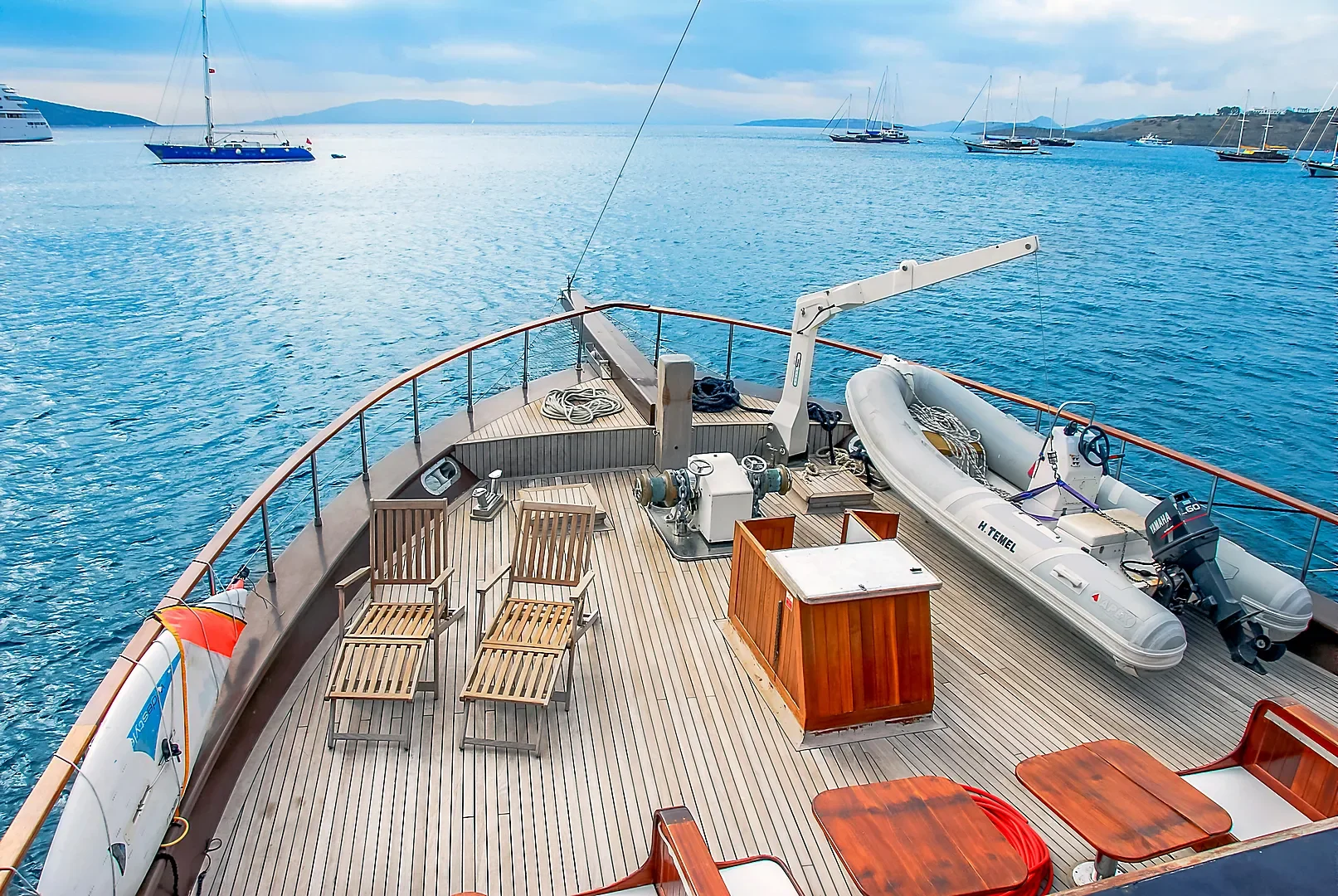
The vessel is the first big dividing line between a blue cruise and a classic sailing holiday. A gulet is specifically designed to be spacious, sociable, and comfortable for life on deck. Wide aft dining areas, generous sunbathing spaces, and multiple en-suite cabins make it particularly appealing for families and private groups who want quality time together without feeling confined.
Classic sailing holidays are more often built around charter yachts. That can mean a bareboat sailing yacht for an experienced crew, a catamaran, or a flotilla setup. In these formats, the yacht is not just the setting; it is part of the activity. Sail handling, monitoring wind conditions, mooring, passage planning, and helming sit closer to the center of the holiday.
Quick Comparison: Blue Cruise vs. Sailing Holiday
| Aspect | Blue Cruise | Classic Sailing Holiday |
|---|---|---|
| Typical Vessel | Traditional wooden gulet (motor/sail) | Monohull, catamaran, or bareboat yacht |
| Main Focus | Comfort, crewed cruising, coastal stops | Sailing, boat handling, active participation |
| Crew Setup | Usually fully crewed | Bareboat, skippered, or flotilla options |
| Itinerary Style | More structured and route-based | More flexible, especially on bareboat |
| On-board Service | Meals and housekeeping are central | Varies widely by charter type |
The Impact of the Crew on Your Holiday
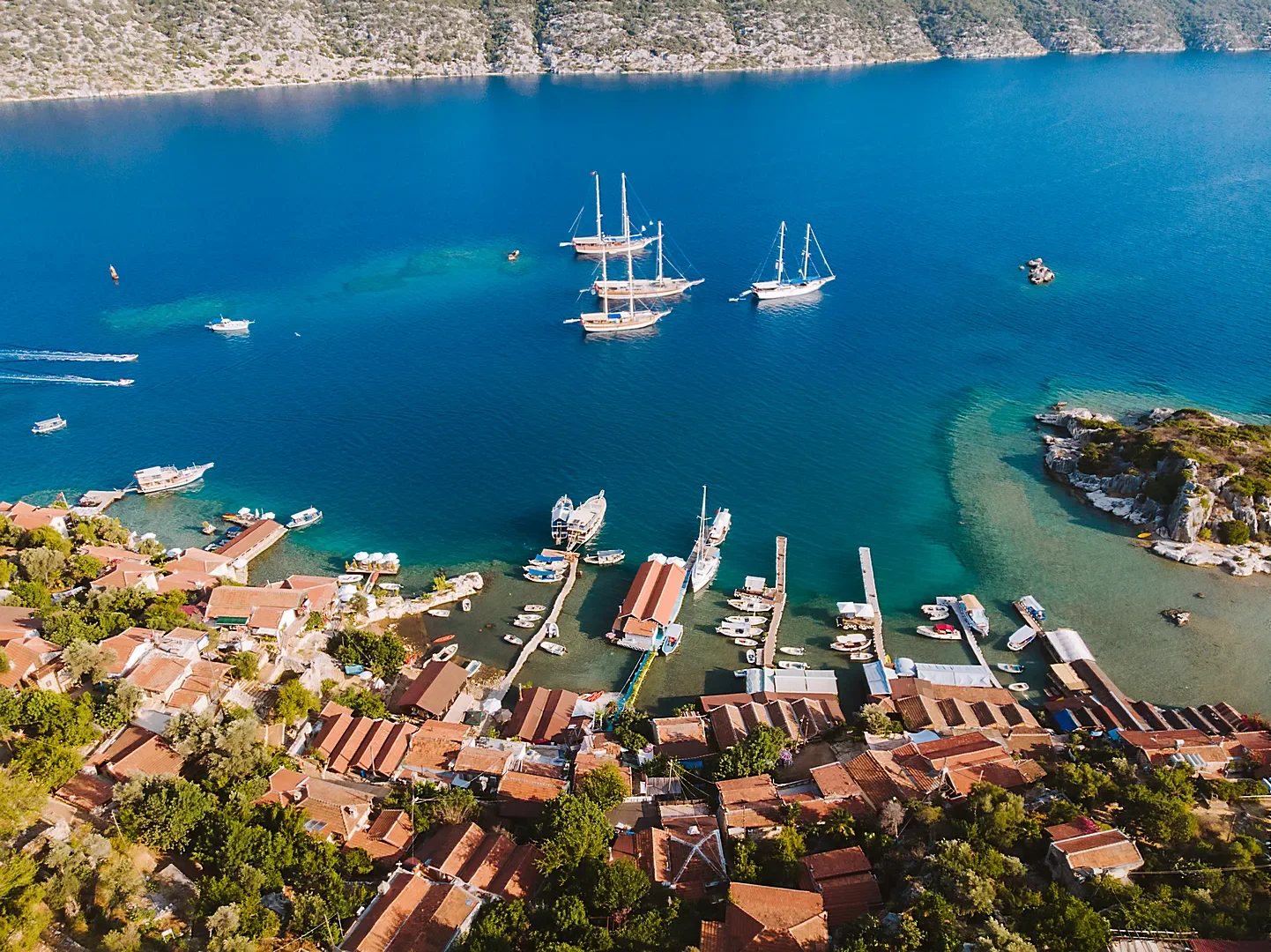
The table explains why travelers who have liked one format don’t always look to try the other. A blue cruise can feel like a boutique floating villa with a view that constantly changes. A sailing holiday can feel more active, more technical, and more independent.
Crew is another big point of variance. On a blue cruise, the crew is typically part of the package rather than an optional extra. The boat is run for the guests, gourmet meals are prepared, and day-to-day logistics are taken care of aboard. This naturally lends itself to a relaxed atmosphere where the focus is on swimming, dining, and enjoying the experience rather than boat handling.
Classic sailing holidays offer more varied choices. Bareboat charter removes the professional crew entirely, suiting clients with the experience and confidence to run a fully found yacht themselves. A skippered holiday provides an experienced captain while maintaining much of the freedom of a yacht charter. A flotilla-style holiday is somewhere in between; crews are given support, but clients are still expected to run the yacht in a hands-on sailing style.
If you’re a holidaymaker choosing between these types, there is no single "best" option—only the one that perfectly matches your holiday preferences:
- Blue cruise: Crew-led, service-oriented, and socially relaxed.
- Bareboat holiday: Independent, skills-based, and highly flexible.
- Skippered charter: Guided sailing that balances professional navigation with guest independence.
- Flotilla holiday: Structured group sailing where you still helm the yacht yourself.
Itinerary Style and Flexibility
Blue cruises come with a route in mind. Even private charters that allow for some adapting typically draw on tried-and-tested coastal itineraries based on the optimal distances between ports, the best-quality anchorages, and the most atmospheric swim spots. That pattern is part of their appeal; people are booking a stretch of coast they know works perfectly, rather than building an itinerary from scratch.
Traditional sailing holidays make it simpler to decide how much energy you want to dedicate to actual sailing versus swimming, snorkeling, or exploring onshore. A traditional sailing vacation is typically more flexible. If everyone is eager to get the sails up and conditions are favorable, you might sail for longer. If you are bareboating, you can tweak your itinerary constantly.
Some Mediterranean sailings, for example, genuinely aim to tempt every guest to have a go at helming and trimming the sail. In comparison, a full-on racing regatta experience might see you on the winch handles for half the day, while long passages with constant tacking would have you working hard for hours before reaching your next destination.
Gulets, with their motors and traditional sails, lean heavily toward genuine cruising and day sailing. They offer a perfect balance, utilizing engine power to reach design destinations efficiently while occasionally hoisting sails for the sheer pleasure of the experience.
Duration: How Long Should You Sail?
Trip length also tends to follow a recognizable pattern. Blue cruises typically last 4 to 7 nights, with weekly charters being the industry standard. In some cases, embarkation and return days are fixed (usually Saturday to Saturday), making the whole holiday feel more like a curated cruise than an open-ended rental.
Classic sailing holidays offer a wider range of durations. While a week is standard for bareboat charters, shorter weekend sails may be possible in cooler months. Custom charters can resolve anything from a long weekend to several weeks. However, the operational effort of a sailing holiday remains largely the same regardless of length.
Those points create a fairly all-encompassing template of what "blue cruise" and "classic" trips typically offer in exchange for your upfront cost. As you can see, on paper at least, the holiday tends to be a little less informal or adventurous when more is covered in the cost and handled by a crew.
Such differences might well influence your personal break. Budget aside, you may have a strong sense of whether you want a holiday where you are personally threading lines, helming the ship, and splashing out on meals in local restaurants—or one where all of that, and more, is taken care of for you in advance.