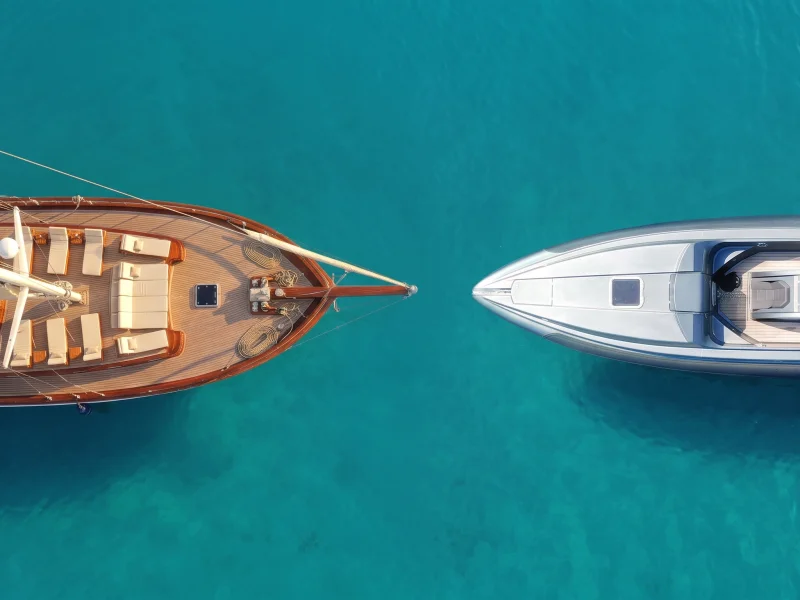
Deciding Between Gulet Charter and Yacht Charter
If you want to cruise the Mediterranean as the locals do, with sails billowing in the breeze and not a motor in sight, a traditional gulet charter is your best choice. Netty Day, Nigel Burgess Yacht Brokerage's gulet expert, describes the boats as "large, wooden, classic-style motor sailors that are traditionally built in Bodrum, Turkey, although many are now built to similar designs in other Turkish ports and in Italy and Greece."
Summary: The Key Differences
- If you are looking for a classic wooden Mediterranean vessel with spacious outdoor living areas and a carefree, fully crewed vacation, then a gulet charter is likely what you have in mind.
- If you are less certain and considering options from handling everything yourself on a bareboat charter to leaving everything to a professional crew on a crewed yacht charter, then a private yacht charter in its broadest sense is the category you are exploring.
- The right choice depends on how a charter handles four key decision filters: service level, group type, route length, and budget structure.
- For groups that value easy dining, lounging on the cushioned aft deck, and spending time together outdoors, gulets are built with you in mind.
The best answer for most first-time groups is straightforward: if nobody wants to skipper the boat or manage onboard logistics, a crewed charter is the right place to start. The real decision then is whether the group prefers the character and deck-focused layout of a gulet or the speed, styling, and wider format choice of other yachts.

What is the difference between a gulet charter and a private yacht charter?
There is an overlap between a gulet and a private yacht charter, but they are not exactly the same. Private yacht charter is a broader term that includes bareboat sailing yachts, skippered yachts, catamarans, motor yachts, and fully crewed yachts. A gulet, on the other hand, is a distinctive boat type.
Gulets are wooden Mediterranean sailing vessels (gulet in Turkish means yacht). Historically, many were built with plank-on-frame construction, while more modern ones utilize wood-epoxy techniques. The core design philosophy is to build a wide-beam boat for its length, making it exceptionally spacious inside and on deck.
The 3 Service Levels: Bareboat, Skippered, and Crewed
Commonly, yacht charter is broken down into three variants by the industry: bareboat, skippered, and crewed. Bareboat means no crew; it is a self-managed format. Skippered means there is a professional skipper on board. Crewed offers a fully associated service, typically with a Captain and Chef who take care of navigation, meals, and daily vessel operations.
A gulet charter is the most hands-off vacation anyone can take. Everything is included in the budget and planned for you. From personal service by a crew of two or more, to every meal and cleaning session. A crewed yacht charter is a close second, depending on the yacht you choose and the crew profile.
The crew level matters more than the word “yacht”. A bareboat catamaran may be modern and luxurious, but you will still be in charge. A crewed gulet may feel more like stepping into a Turkish travel brochure, acting as a turnkey floating villa. If your group just wants to sail, swim, eat, and hand all responsibilities over, the crew level matters more than the type of vessel.
"Gulet Broker organizes private gulet charters, luxury motor yachts, and trawlers – enabling groups to compare vessel style and service format before making their booking."
A good rule of thumb is to pose one simple question straight up: who’s in charge of navigating, cooking, and cleaning? If the response is “you guys”, then it’s not a hands-off charter, regardless of how gleaming the ship looks on the internet.
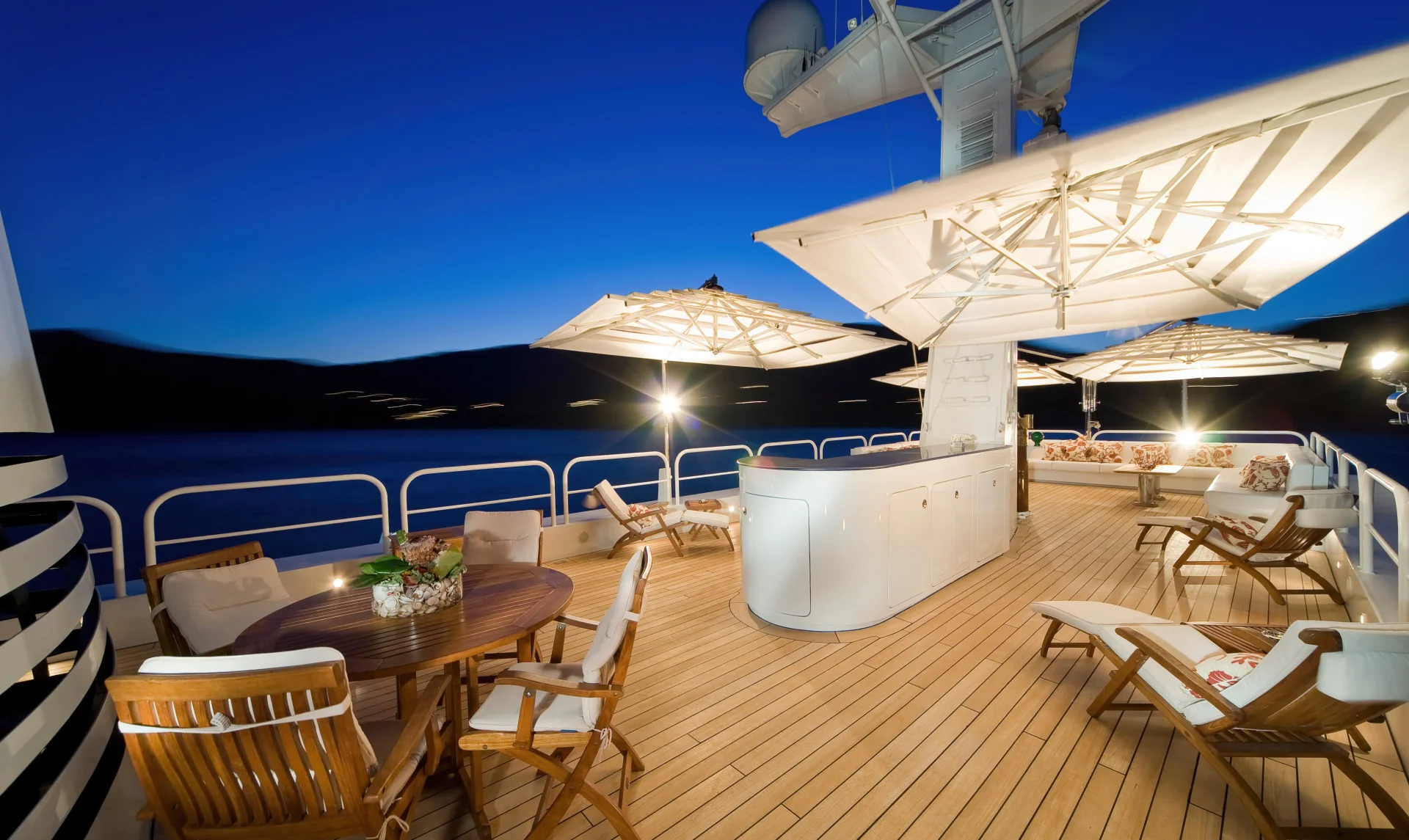
Which private yacht charters suit these different types of travellers best?
Everyone will have their preference, but the charter that best suits your group will be based on who’s on the holiday and how much pampering they want. Once you know your crew and route requirements, most groups will be able to shortlist their options quickly:
- Gulet Broker comparison route: If a traveller wants specialist help comparing private gulet charters, luxury motor yachts, and trawlers across Turkey, Greece, and Croatia.
- Crewed gulet charter: If a family, multi-generational group, or celebratory trip looks to prioritise outdoor dining, a slow, easy pace, and plenty of social space.
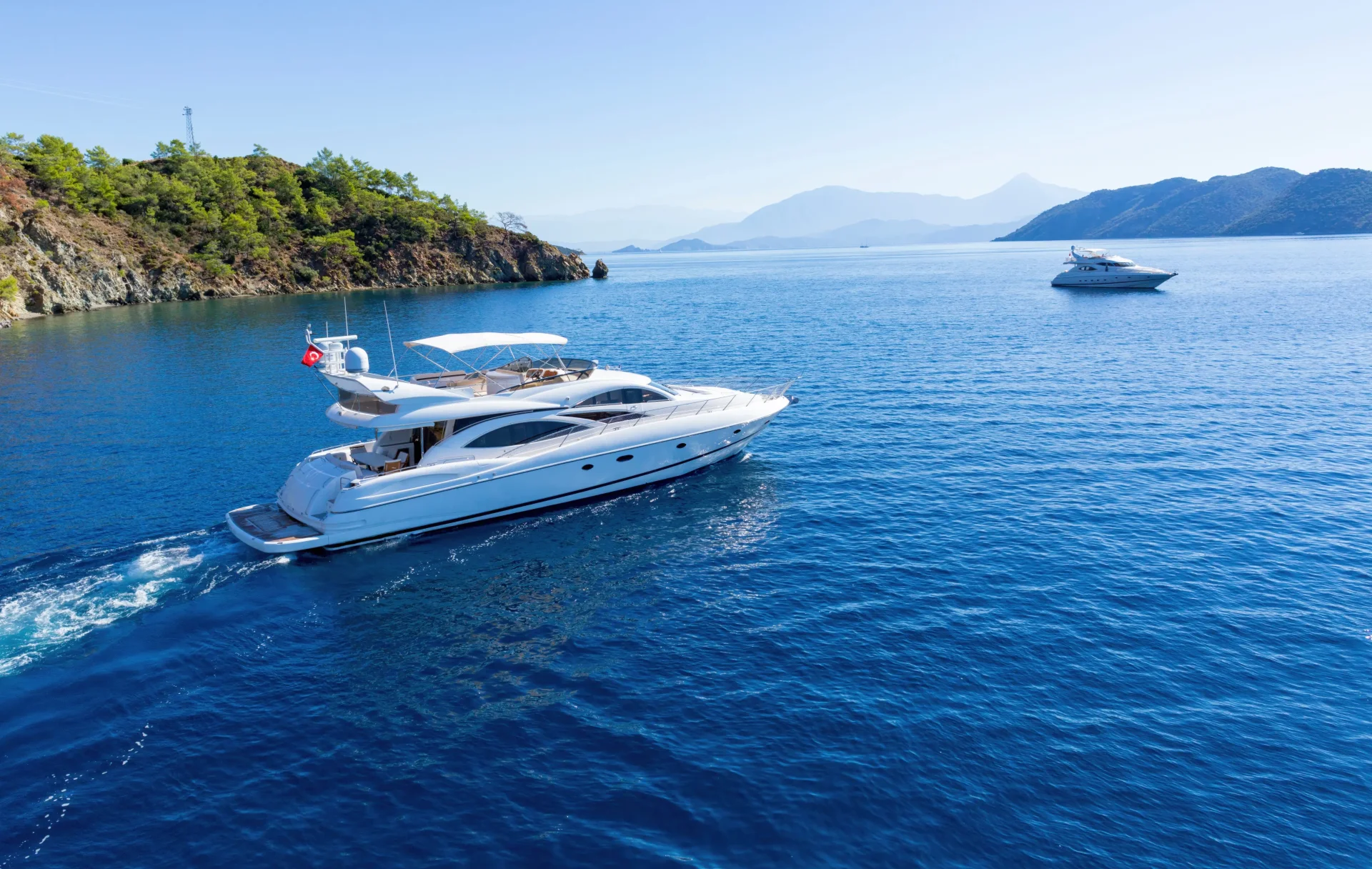
- Crewed motor yacht charter: If a group wants faster cruising, modern lodging, and the ability to cover greater distances with less travel time.
- Skippered sailing yacht or catamaran: If a group enjoys sailing but prefers professional responsibility and a smaller crew for lower costs.
- Bareboat yacht charter: If someone in the group holds a proper skipper certificate and the group wants minimum costs and maximum independence.
More service = Less guest effort & control. The more the ship’s company serves, the less work and worry for the guests. Conversely, service is cut back with some of the less labor-intensive options, but the trade-off involves taking on more responsibility and making decisions yourself.
How does a group choose the right charter format in 3 steps?
You can figure out the format that is right for your group by starting with service, then logically moving to layout, and finally verifying the itinerary.
- Step 1: Decide the service level first. If no one is in the mood to pilot the boat or shop for supplies, cross out bareboat at the outset. If you want a vacation with nothing to organise, the crewed gulet and crewed motor yacht options are the last two standing.
- Step 2: Match the layout to actual behaviour. Most make the mistake of selecting based on cabin comfort while overlooking where everyone hangs out. If your group prefers lazing around the sundeck and comes together outdoors in the evenings, a gulet is often the answer. Yachts work best for groups that want more privacy post-dinner and fast transfers.
- Step 3: Test the itinerary against the vessel. If you don’t mind cutting the engine shortly after setting off in Turkey or Croatia, a gulet is a natural choice. On the other hand, for crossing solid mileage in a week to reach outlying islands in Greece, a motor yacht makes more sense. Time + distance = speed.
A useful tip is to request a sample day onboard. You get more from that than a bullet-point list of details because you see what time breakfast is, how long you are underway, whether meals are formal or casual, and if the general pace of the charter feels like a fast-paced "restaurant" or a relaxed "villa".
How do gulets and other yachts compare on space, cabins, and social areas?
Outdoor living is where many gulets seriously overperform the average motor and sailing yacht. Bodrum-style gulets in particular are sometimes selected because the actual boat itself encourages group interaction.
With many gulets, the standout feature is not sheer capacity in the cabins, but the synergy between dining aft, lounging forward, and the general flow of movement. A common myth is that more cabins mean a better group charter. The fact is that comfort depends on whether the group would like to have everyone together or prefers more separation. If togetherness is what you're after, gulets often perform better than their spec sheet would imply.
How Should a Charter Budget Be Planned?
Planning a trip on a private yacht charter is like assembling a puzzle. Some of the pieces involve choosing your dream destination, deciding between a sailing yacht, catamaran, gulet, trawler, or motor yacht, and picking the right week. The final and most important piece is aligning the onboard lifestyle with the group's budget and expectations.
Does yacht type or geography guide travellers more closely?
Route and yacht type are equally important. However, geography should usually decide which has priority. For example, a specific coast or archipelago like the Adriatic may simply be better visited on a traditional gulet where classic wood can make a dramatic difference to the experience.
Motor yachts have an advantage when the trip needs to cover more distance in a single week. Italy and Spain can reward faster cruising if the group wants to connect more places quickly. If the route is the priority, then the yacht type should follow geography.
How can travellers verify a private yacht charter before booking in 3 steps?
A private yacht charter should be verified through charter type, current vessel details, and itinerary realism to reduce booking mistakes.
- Step 1: Confirm the charter category. Ask whether the booking is bareboat, skippered, or crewed. If it is bareboat, confirm the required licences before paying a deposit.
- Step 2: Review current facts, not archive photos. Request an up-to-date layout, cabin configuration, and inclusion list. Never assume that an older photo set reflects today’s condition or recent refits.
- Step 3: Pressure-test the proposed route. If the itinerary sounds too busy for the vessel and duration, it probably is. A realistic charter plan should comfortably allow for weather, meal timing, swim stops, and port logistics.
Is a gulet or motor yacht better for families and celebrations?
A crewed gulet is often the safest and most enjoyable choice for families and mixed-age groups, while a motor yacht can suit milestone trips that value speed and a more contemporary feel.
Families and first-time guests benefit heavily from simplicity. When the crew handles the practical work, children, grandparents, and non-sailing adults can enjoy the holiday without role confusion. Large deck dining areas and easy social flow make gulets especially attractive for reunions and groups that want quality time together.