

Spain Gulet Charters | Luxury Gulet Yachts in Spain
Sail Spain by gulet. Explore Mallorca, Ibiza, Menorca, and Formentera with luxury gulet charters, custom itineraries, and five-star Balearic service.
Start your adventure by selecting a destination below.
Spain Yacht Charter: A Broker's Guide to Chartering a Private Gulet in the Balearics and Barcelona
Mediterranean Spain runs on two distinct sailing grounds: the open-water Balearic archipelago and the mainland gateway of Barcelona and the Costa Brava. Clients boarding a gulet here are choosing between island-hopping on protected sea and coastal cruising with easy access to Catalan anchorages. Before comparing hulls, it helps to View All Spain Gulet Yachts and cross-check draft, cabin count, and crew ratio against the specific Spain Itineraries you're weighing.
Spain differs from the Aegean or the Turkish Riviera in one key respect: distances between islands are longer, and crossings — Palma to Ibiza, for instance — run four to six hours in open sea rather than short island-to-island hops. Charter planning here rewards a realistic route with fewer, longer legs rather than a packed itinerary. That's the framing this guide takes.
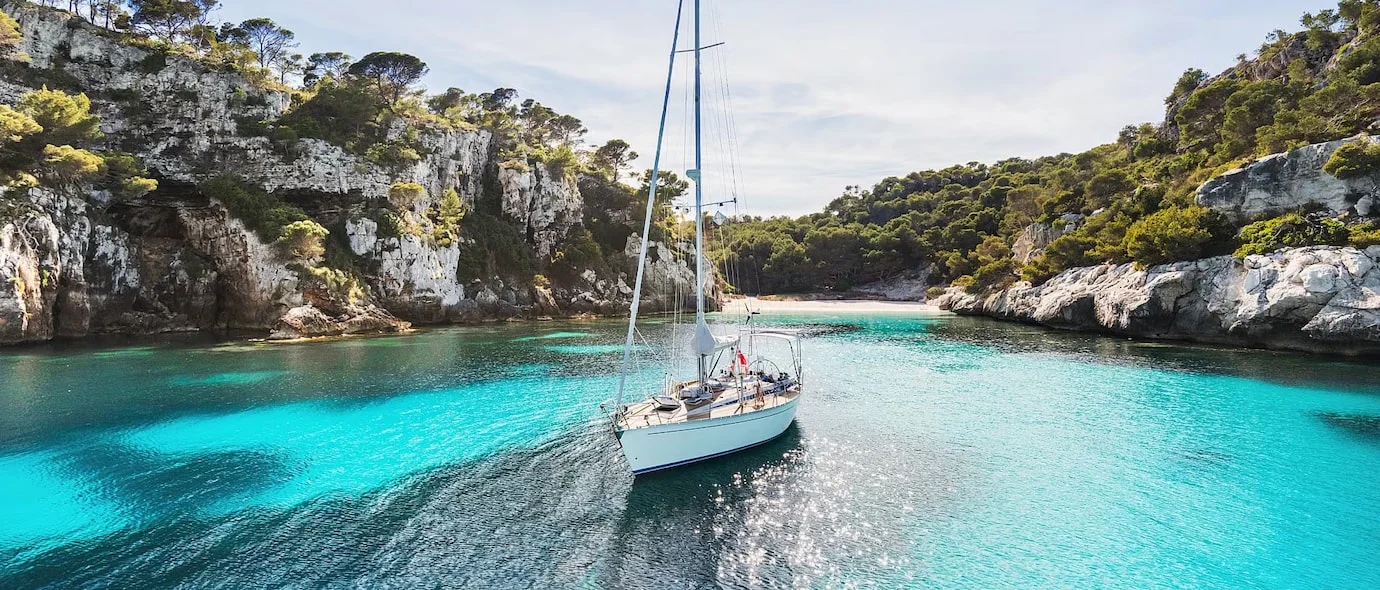
Where to Board a Gulet in Spain: Main Charter Hubs
Two boarding regions cover nearly all private crewed charter activity in Spanish waters. Each has a different sailing character, marina infrastructure, and crowd pattern in July and August.
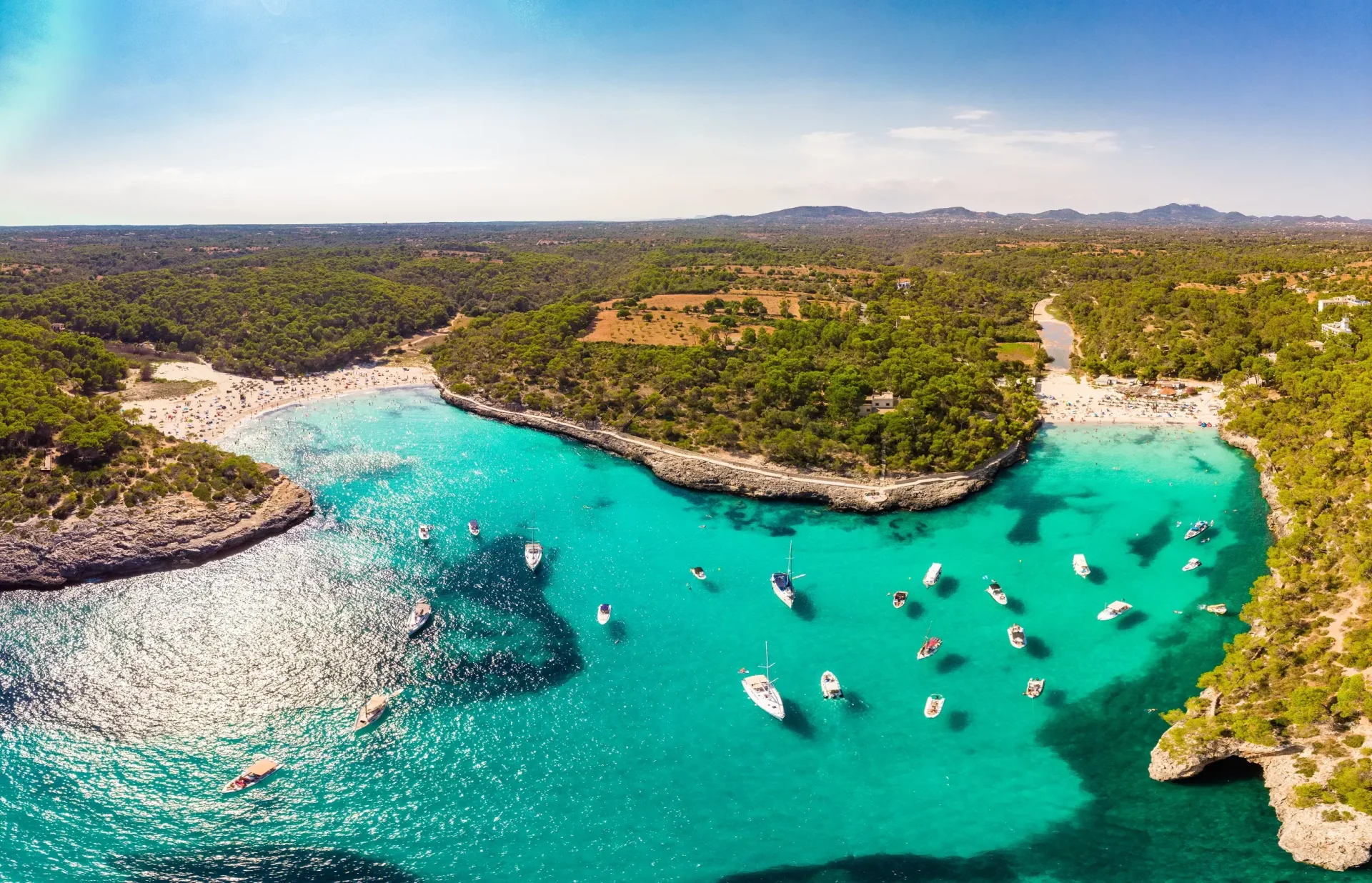
Balearics: Palma de Mallorca, Ibiza, Menorca & Formentera
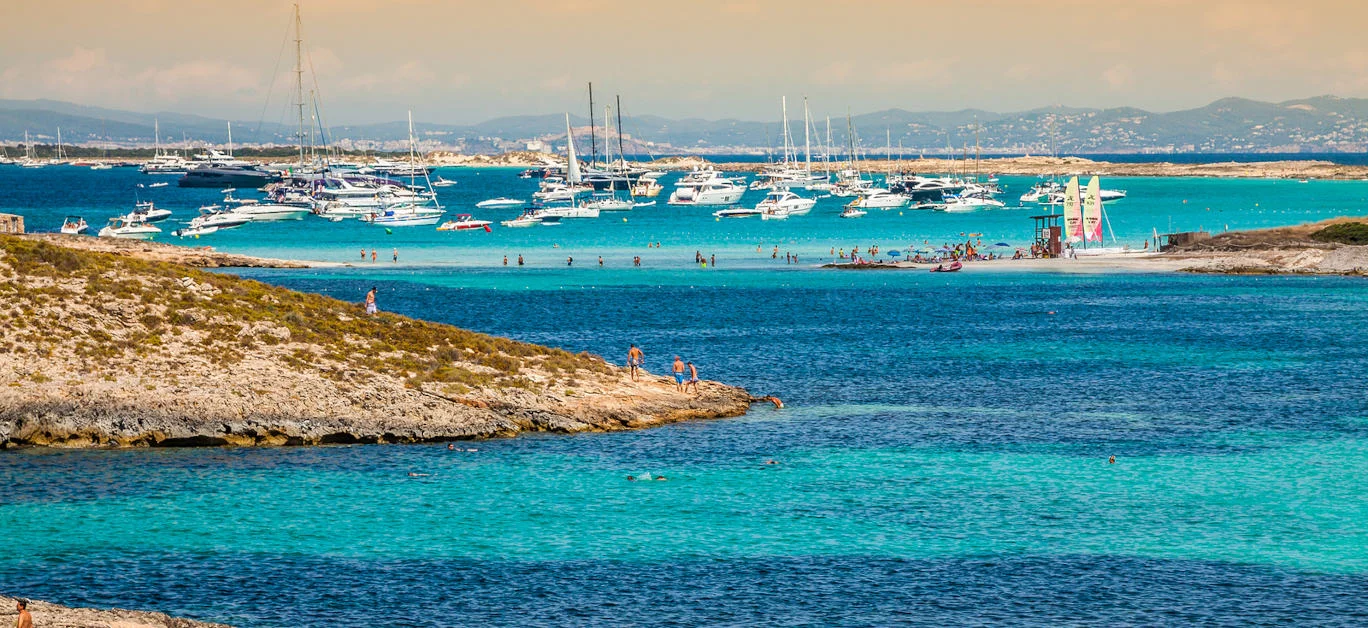
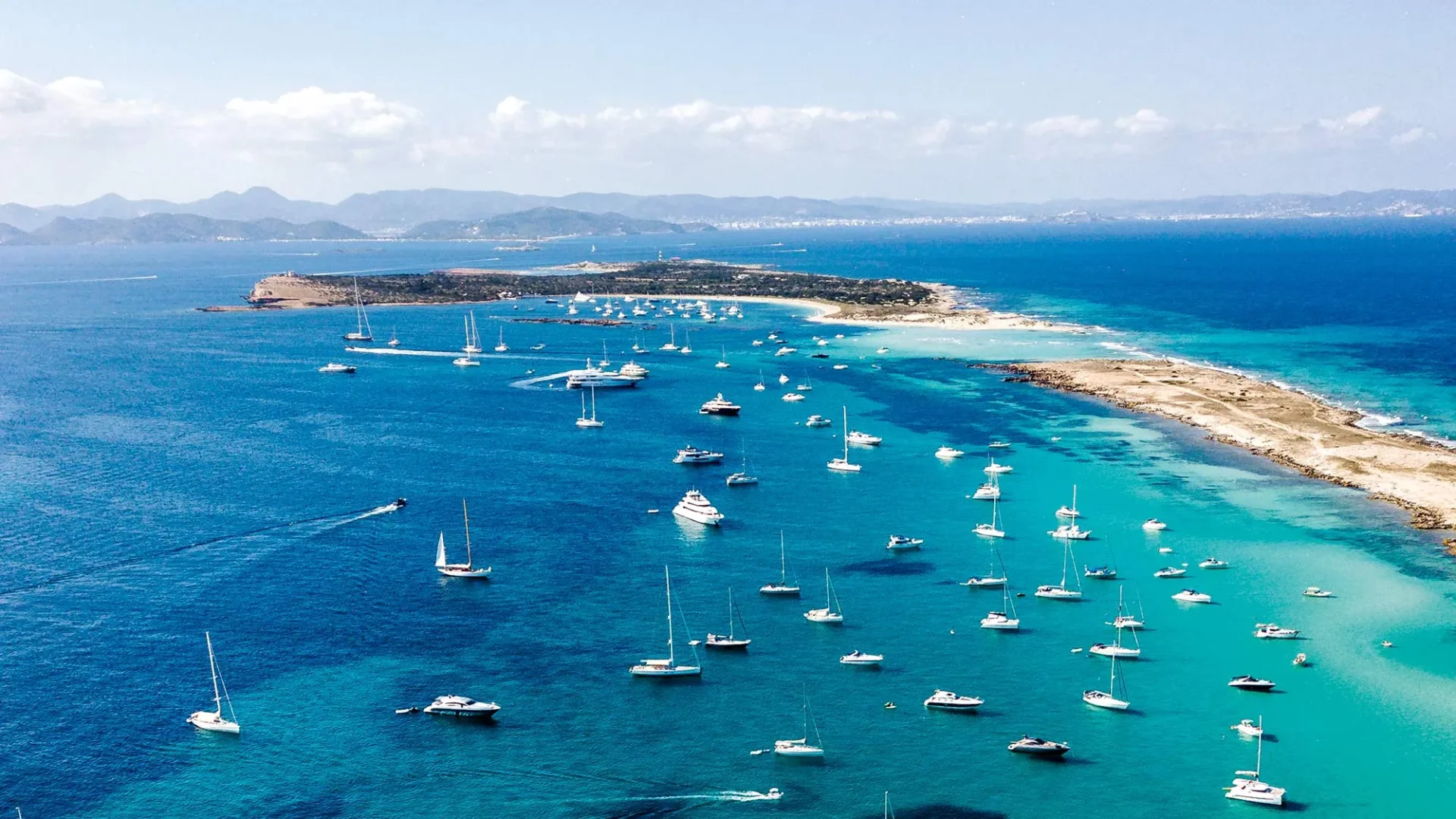
The Balearics hub covers four islands — Mallorca, Ibiza, Menorca, and Formentera — usually boarded from Palma de Mallorca or Ibiza Town. Marina berths at Port d'Andratx, Puerto Portals, and Marina Ibiza handle the bulk of superyacht and gulet traffic, with Palma's STP Shipyard also servicing larger draft vessels mid-charter. Sailing grounds range from the sheer limestone coves of Mallorca's northwest coast to the shallow turquoise flats off Formentera's Ses Illetes, where anchoring depth rarely exceeds four metres.
Guests wanting a full island-hop week — Mallorca to Menorca, then south to Ibiza and Formentera — should plan around six- to eight-hour transit days between islands, since these are open Mediterranean crossings, not sheltered channel hops.
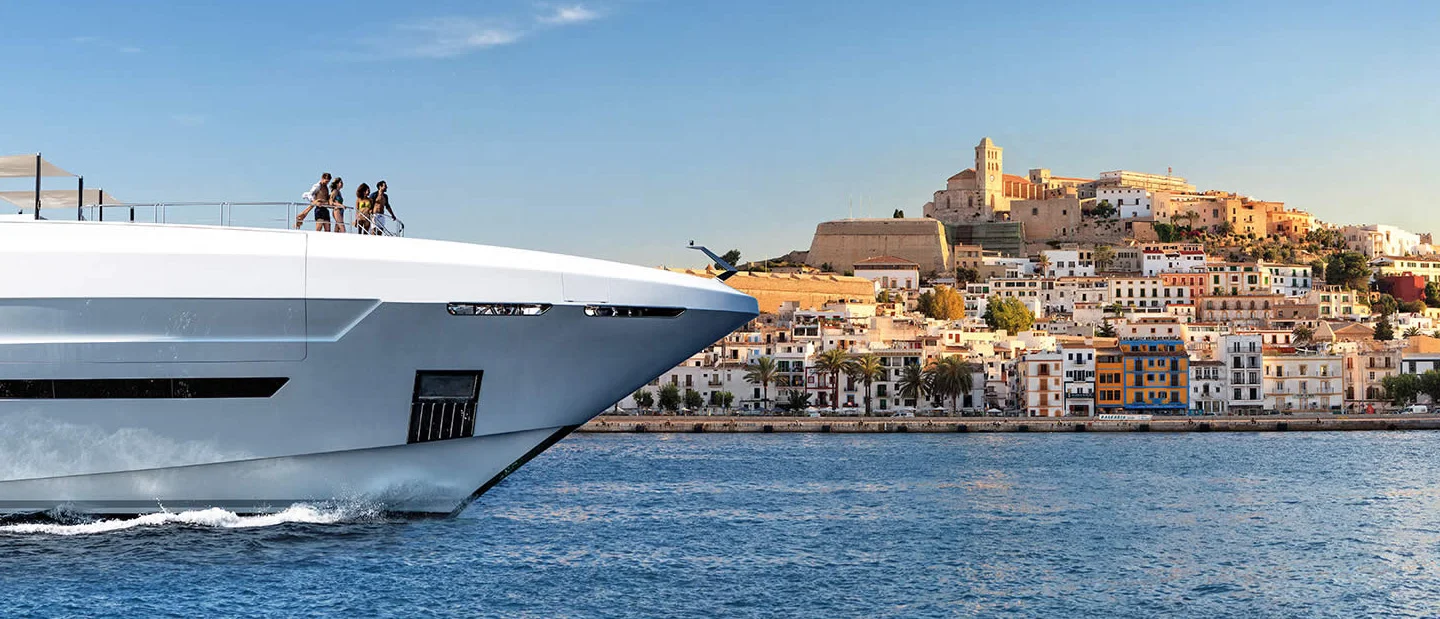
Barcelona: Mainland Gateway to the Costa Brava
Barcelona serves as the mainland boarding point, with charter yachts typically berthed at Marina Port Vell or Marina Vela, both a short transfer from El Prat Airport and the city centre. From here, coastal-hugging routes run north along the Costa Brava toward Cadaqués and Cap de Creus, or south toward Tarragona and the Costa Dorada, giving guests protected sailing without the long open crossings the Balearics require.
Barcelona suits clients combining a city stay with a shorter coastal charter, or those chartering a smaller gulet for a long weekend rather than a full week offshore.
Weather, Winds & Best Time to Charter in Spain
Spanish Mediterranean weather is driven by a small set of named winds. The Tramontana drops cold and dry from the north over the Gulf of Roses and can push 25-30 knots in spring and autumn, mainly affecting the Costa Brava and northern Balearics. The Mistral, funnelled down the Rhône valley, occasionally reaches Mallorca's north coast with similar force. Summer afternoons bring the Embat, a thermal sea breeze that builds from midday and typically dies by early evening — predictable enough that crews plan lunch anchorages around it.
July and August deliver the most reliable sailing conditions — light morning air, building afternoon breeze, sea temperatures around 26-27°C — but also the heaviest anchorage traffic in Formentera and Ibiza's Cala Comte. June and September offer nearly identical weather with noticeably fewer boats on the popular moorings, and are the months most experienced brokers recommend to repeat clients.
| Month | Conditions | Best For |
| May | Mild, 20-22°C sea, occasional Tramontana | Early-season privacy, fewer boats |
| June | Settled, thermal breeze building daily | Families, first-time charter guests |
| July-Aug | Warmest, busiest anchorages, reliable Embat | Groups wanting guaranteed sun; expect crowded coves |
| Sept | Warm sea, thinning crowds | Repeat clients, honeymoon charters |
| Oct | Cooling, Tramontana risk increases | Experienced sailors, storm-watching itineraries |
Getting to Spain & Boarding Logistics
Access into the Balearics runs primarily through Palma de Mallorca Airport (PMI) and Ibiza Airport (IBZ), both with frequent connections from major European hubs and a marina transfer under 30 minutes. Menorca Airport (MAH) serves guests boarding directly in Mahón. Barcelona guests fly into El Prat Airport (BCN), roughly 20 minutes by private transfer to Port Vell.
- Boarding rhythm: most charters run Saturday-to-Saturday, with embarkation from 5:00pm on turnover day and disembarkation by 9:00am the following Saturday.
- Private transfers: arranged directly by the broker or crew — flag transfer times to your airline so the crew can time provisioning around your arrival window.
- Provisioning: initial stores are loaded before boarding; guests typically fund an APA (Advance Provisioning Allowance) for fuel, marina fees, and on-board wine.
- Luggage: soft bags are strongly preferred over hard suitcases given limited cabin storage on most gulets.
- Documentation: a valid passport is required for all EU and non-EU nationals; no separate cruising permit is needed for private charter within Spanish territorial waters.
Sample Route Thinking: Island-Hopping vs. Coastal Cruising
Two distinct route styles cover most Spanish charters. The first is a Balearic loop — Palma, Port d'Andratx, Ibiza, Formentera, and back — built around three or four open-water crossings and best suited to guests comfortable with a full sea day. The second is a Barcelona-based coastal run hugging the Costa Brava, with shorter daily legs and a marina or anchorage every 15-20 nautical miles, better for families with younger children or first-time charter guests.
Both route types can be reviewed in detail through the Spain Itineraries library, which breaks each week down by nautical miles, anchorage names, and typical daily sailing hours. Clients weighing Spain against other Mediterranean grounds can also explore Turkey destinations or explore Greece destinations for a shorter-hop, island-dense alternative.
Frequently Asked Questions: Chartering a Gulet in Spain
Do I need a visa to board a private yacht charter in Spain?
EU and UK nationals do not need a visa for stays under 90 days. Non-EU nationals should check standard Schengen visa requirements, since Spain is a full Schengen member and boarding a yacht follows the same entry rules as arriving by air.
What does the charter price include, and what is APA?
The base charter fee covers the yacht, full crew, and standard equipment. Fuel, marina fees, provisioning, and on-board drinks are covered by the APA (Advance Provisioning Allowance), typically 25-30% of the charter fee, paid upfront and reconciled with receipts at the end of the week. Full breakdowns are covered in our guide to gulet charter prices.
Can I sail between the Balearics and mainland Spain in one week?
Technically yes, but it isn't recommended for a standard seven-day charter. The crossing from Palma to Barcelona runs roughly nine to eleven hours in open sea, which consumes a full charter day each way. Most brokers instead book two separate weeks — one in the Balearics, one from Barcelona — rather than combining both in a single itinerary.
Do I need prior sailing experience to charter a gulet in Spain?
No. This is a fully crewed charter — a licensed captain and crew handle navigation, mooring, and anchoring throughout the week. Guests are not required to hold any sailing qualification or prior experience on the water.
What size gulet or yacht suits a family charter in the Balearics?
Families of six to eight generally do well on a 24-30 metre gulet with three or four cabins, giving enough shaded deck space for midday anchoring off Formentera or Cala Macarella without feeling cramped. Larger groups of ten or more should look at vessels above 30 metres to keep cabin sizes comfortable rather than adding more berths into a smaller hull.
Is turnover day always a Saturday, and how strict is the boarding time?
Saturday-to-Saturday is standard across Spanish marinas, though some operators in Barcelona also accept Sunday turnovers in shoulder season. Boarding time is generally fixed at 5:00pm to give the crew a full day for cleaning, fresh provisioning, and fuel between guests.
Broker's Tip: Avoiding the August Crush in the Balearics
If your dates are flexible, shift a Balearic charter into the last week of June or the first two weeks of September. The Embat still builds reliably, sea temperature is within a degree of peak summer, and anchorages like Cala Macarelleta or Ses Illetes clear out by mid-afternoon rather than staying packed until sunset. For groups locked into July or August, ask your broker to build in an early-morning arrival at the day's headline anchorage — arriving before 10am at Es Vedrà or Cala Mondragó still buys reasonable swinging room before the day-boat traffic arrives. Start comparing options through View All Spain Gulet Yachts, and read up on best time to charter a gulet before locking your week.
Sail this destination aboard one of our handpicked Spain gulets
Discover Spain featured yachts perfect for your journey

Charter this route with our expertly selected gulets
Explore one of our carefully crafted Spain itineraries
Discover Spain sailing routes perfect for your next adventure